I’ve realized that I keep mentioning Ghana in talking about Uganda because it is my closest reference point, so I figured I would dedicate a post to some comparison of the two. I’ll likely continue to add to this post as I keep learning more. Keep in mind that most of my experience in Ghana was in the capital city (Accra), while in Uganda I am in a more agricultural setting in Kabale (though still urban).
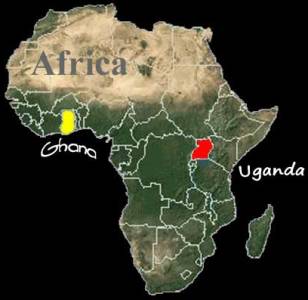
- Weather: Ghana was HOT, no matter where you went, because it is on the equator, and the south is really humid because of being along the ocean. Uganda is also on the equator, so there are definitely areas as hot as Ghana, but Kabale is in the mountains so the elevation makes it a lot cooler (though you’re still in direct sunlight and can sunburn easily). Right now is a colder season, so it’s actually been getting quite cool (in the 50s) and most days I’m pretty comfortable in a long skirt and long-sleeve or sweater.
- Food: Ghanaian food had a lot of spices, namely ‘pepper’, which made the food insanely hot sometimes. Not to mention it was served at a piping hot temperature in hot weather, so I was always sweating during meals and had to blow my nose at the end. The foods I’ve had in Uganda so far have been much more bland (not flavorless, just not so much added flavor). Soup doesn’t seem to be offered very much in Kabale, and there’s a lot less rice than in Accra. Mostly I’ve just seen white rice eaten with different foods and sauces, but in Ghana it’s the opposite. Instead of having one kind of rice and mixing it up with the topping, there are a couple different ways of preparing rice but all are eaten with the same tomato stew on top. Ugandans also use a lot less oil in cooking. Food is still served extremely hot here, and Jenet has already accused me of being afraid of hot food.
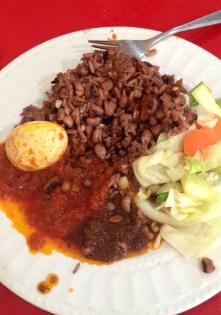
Ghana: Waakye and stew 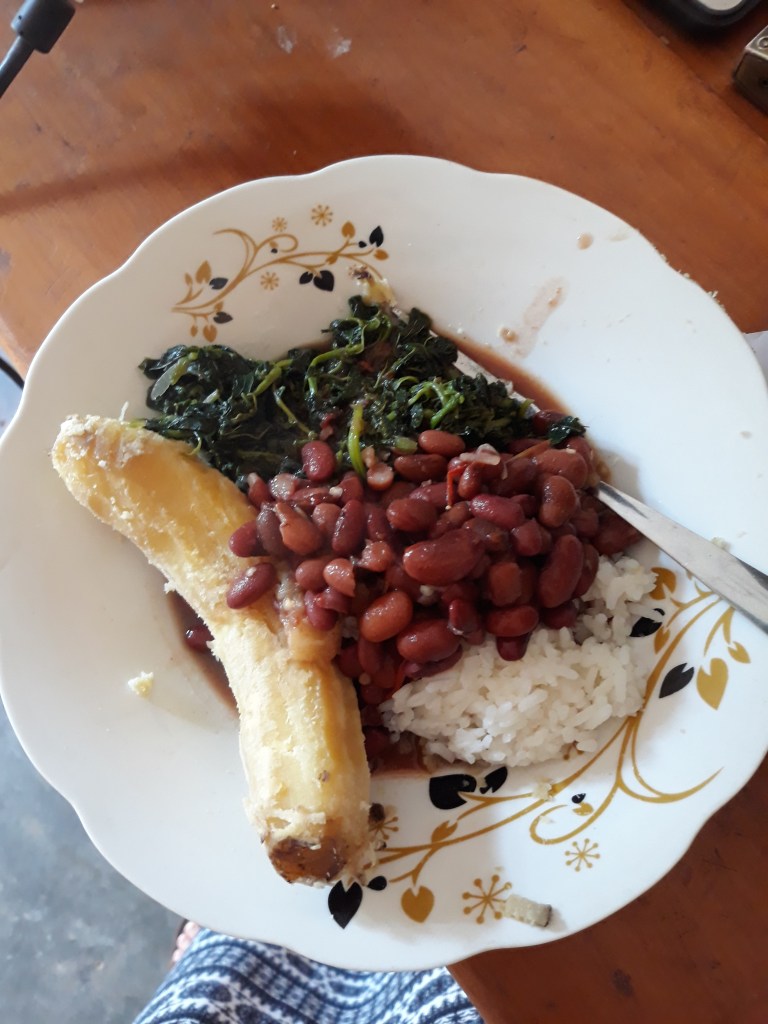
Uganda: Matoke, bean stew, greens, and rice
- Bananas: As far as I know, Ghana only had two kinds of bananas: sweet, yellow bananas and plantains. In Kabale, there are tons of banana trees everywhere and I’ve never seen so many bananas in my life being shipped to different places. According to Carol, there are 9 different varieties of banana. They vary from being small, large, sweet, or what I would consider a plantain. I think the most common way bananas are eaten is in the form of matoke, although the sweet ones are also eaten raw. I hear that gonja is a delicacy.
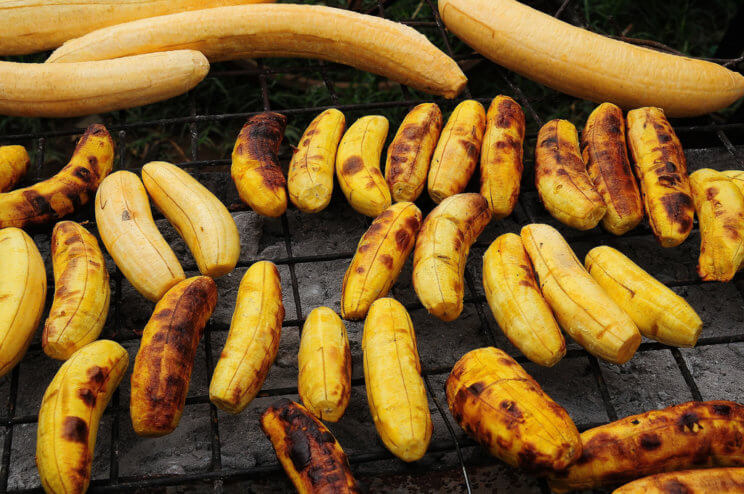
Gonja 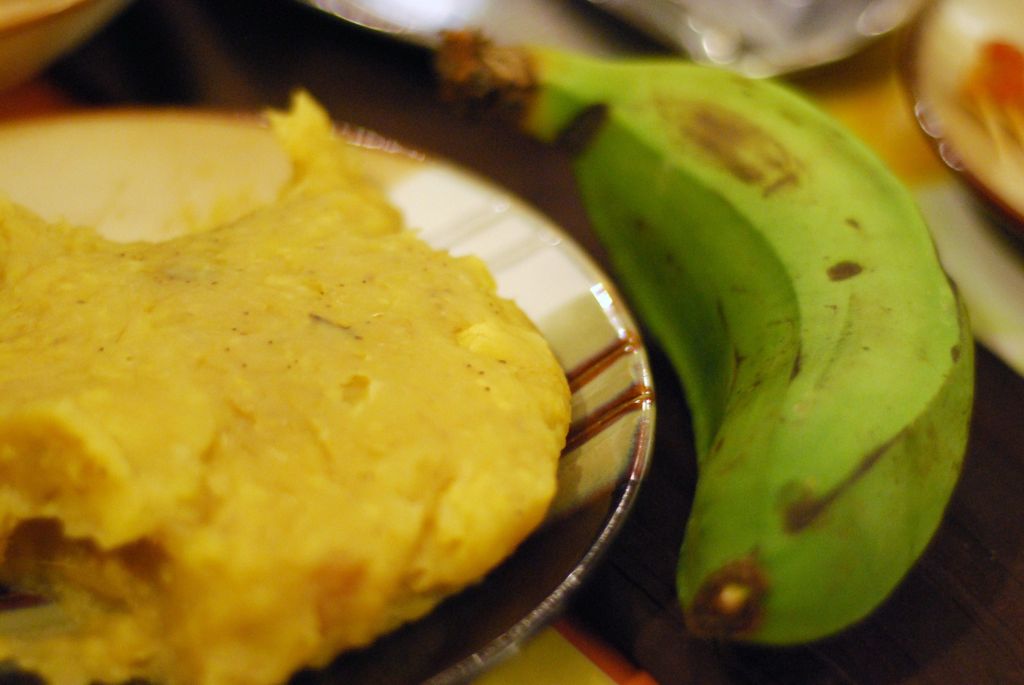
Matoke
- Handshakes: In both places most handshakes are basically the same as an American handshake, only much less firm. But on the occasion it’s different, Ghanaians will start by shaking your hand like normal, but as you are pulling your hands apart each person will grab the other’s middle finger between their middle finger and thumb and snap their fingers off of the other person’s. In Uganda, the varying handshake will also start normal, but instead of pulling your hands apart, the hands are only re-positioned so that each person’s hand is now rotated to angle upwards and instead of holding onto the person’s 4 fingers you are now holding onto their thumb. The two people then return their hands to the original handshake position, and can repeat this process a few times if they’d like.
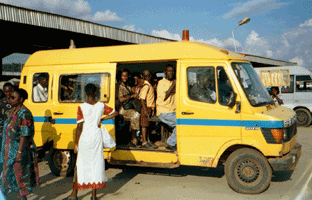
Ghana: Tro-tro 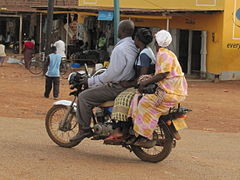
Uganda: Boda boda
- Transportation: In Ghana the most common form of public transport was tro-tros, basically a 15 passenger van with a driver and a mate who leans out the window yelling to pedestrians where the tro-tro is headed and lets the driver know when someone indicates that they want to get on (by a slight wave of the hand or nod). Taxis and Uber were also common. In Kabale, the most common form is boda-boda, a small motorcycle. It’s actually pretty fun to ride them with the wind blowing in your hair. Usually it’s just a driver and one or two passengers, but one time I saw 4 small people and a fair amount of cargo all on one. A couple times I have seen a passenger riding a boda and carrying a couple weed-wackers up in the air. Many women ride side-saddle because of their skirts, but I haven’t worked up the courage to do that yet. There are still large trucks and cars on the roads, but much less. There are also a ton of people on bicycles riding on the roads, both individuals and drivers with passengers paying them for a ride and sitting on a pad attached to the back. Traffic is on the left side of the road in Uganda, right side in Ghana (although that can sometimes be a bit arbitrary).
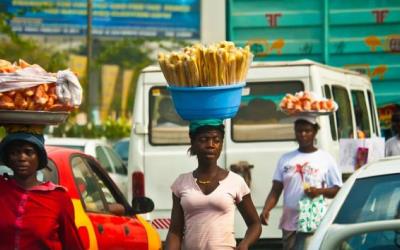
Hawkers: I’m not sure if they go by the same name in both countries, but in Ghana a Hawker was someone selling goods along the road, often carrying items on their head while weaving in and out of cars that are stopped at a light to sell things through people’s car windows. There were tons in Ghana, but I haven’t seen many in Uganda. To be honest I kinda miss the hawkers because they were so convenient when you get hungry in the car (no need to pack snacks), and that was how I got most of my plantain chips.
- Speech: I already mentioned accent in First Impressions, but native Rukiga speakers will often use Rs and Ls interchangeably, and use an S in place of a ‘th’ sound. In Ghana I remember hearing the ‘th’ sound replaced with a hard T. Something I noticed that people in Kabale do a lot is that when they are trying to think of a word, instead of just pausing or saying “umm”, they will stop mid-sentence and ask “What?” and then continue to answer their own question. For example, if I’m telling you I ate chips today, but briefly forget the word chips, I will say to you “Today I was eating what? Chips.” and then continue with my story like nothing happened. I don’t ever remember someone doing that in Ghana.
Photo Credits: deki.org.uk (Gonja), Thembtation on Pintrest (Matoke), africadeybe.blogspot.com (Tro-tro), wikipedia.com (Boda boda), modernghana.com (Hawkers)
 Lindy in Kabale